
Reconfiguring Office Layouts Fast: How Modular Furniture Cuts Capex
As team sizes fluctuate and hybrid work models evolve, rigid fixed carpentry wastes capital. Here is how demountable modular furniture systems allow offices to adapt overnight with zero construction mess.
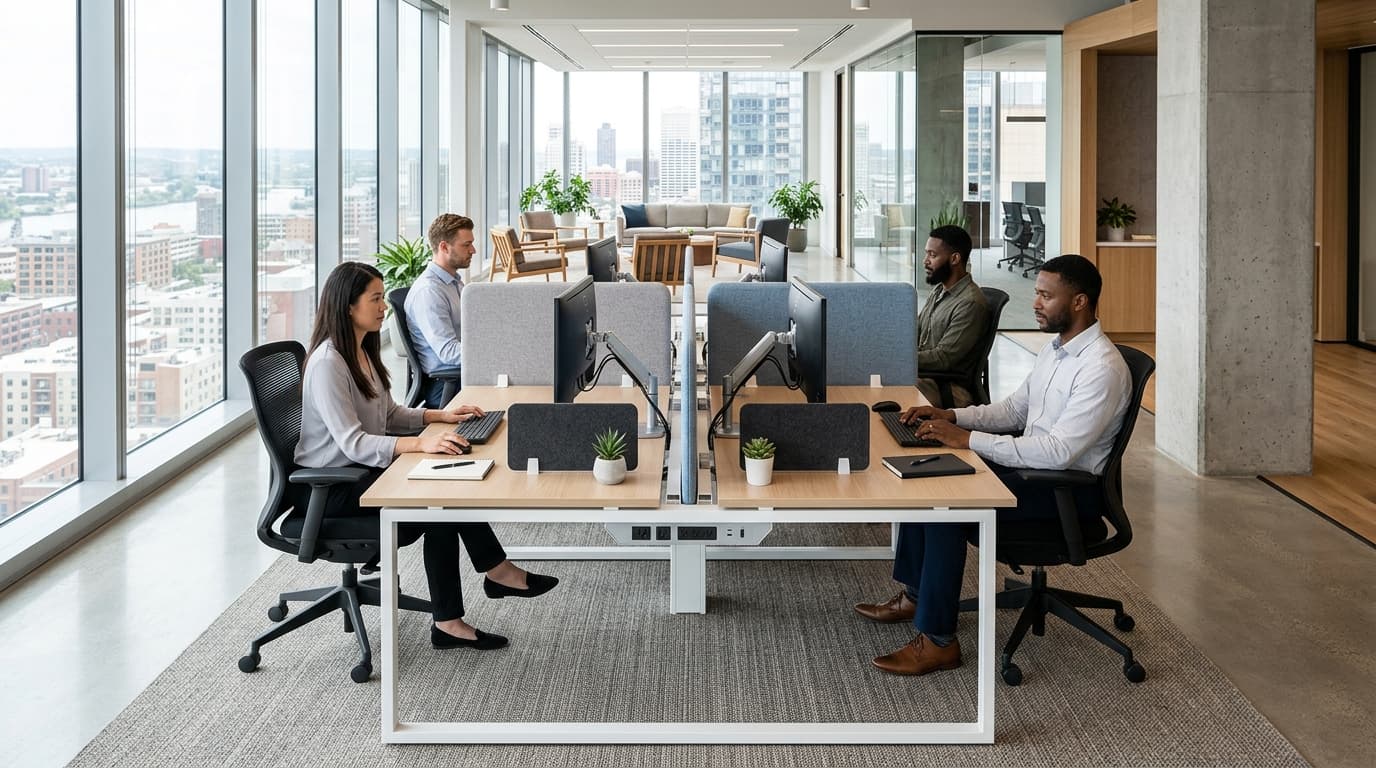
Key Highlights at a Glance
- Modular metal framing can be extended, split, or shifted without damage.
- Reusing components saves 40% to 60% capital expenditure compared to fresh carpentry.
- Weekend reconfigurations ensure zero employee work hours are lost.
- Plug-and-play wiring allows rapid cable changes without breaking walls.
The Challenge & Industry Context
Traditional custom carpentry (plywood and laminate built on site) cannot be altered without sledgehammers, carpenter dust, and weeks of downtime. When headcounts grow or teams merge, companies are forced to discard fixed desks and spend fresh capital.
Axiom Spaceworks designs non-destructive modular furniture systems that connect via interlocking metal fasteners. Desks can be expanded from 4-seaters to 8-seaters, split into individual focus pods, or converted into collaboration zones over a single weekend.
Modular Flexibility Features
Standardized components that re-assemble like building blocks:
Universal Leg & Beam Framing
Powder-coated steel understructures that share intermediate legs. Expanding a cluster requires only an additional beam and top rather than an entire new desk.
Clip-On Acoustic Screens
Divider panels that unclip and reposition effortlessly without leaving screw holes or damaging the desktop laminate.
Daisy-Chain Plug & Play Electrics
Modular power distribution cables that disconnect and re-route under desks without hiring licensed electricians to rip open walls.
Why Modular Flexibility Protects Your Budget
40% to 60% Fitout Capex Savings
Instead of writing off furniture when relocating or expanding, existing modular components are re-used, saving lakhs in new material purchases.
Zero Lost Business Days
A 50-workstation departmental reconfiguration can be completed on Saturday, leaving the floor clean and operational for Monday morning.
Eco-Friendly Sustainable Real Estate
Eliminates carpentry demolition debris and landfill waste, supporting your company's corporate sustainability and ESG targets.
How Axiom Spaceworks Executes This on Site
Inventory & New Layout CAD Modeling
Auditing existing desks and creating a revised CAD seating plan that matches the department's updated headcount.
Weekend Disassembly & Re-Alignment
Trained technicians disassemble desks, re-anchor shared beams, and level feet for rock-solid stability.
Re-wiring & Clean Handover
Re-routing network cables, testing electrical power tracks, and cleaning surfaces ready for Monday staff arrival.
Related Case Studies & Guides
View All 9 Guides →Government Tactile Rules & Regulations (Banks & Offices)
A plain-English guide to the latest Indian government rules and statutory standards for tactile indicators. Learn what the RPwD Act 2016, MoHUA 2021 guidelines, and RBI mandates require for corporate offices, banks, ATMs, IT parks, and commercial buildings.
Tactile Flooring & RPwD Compliance in India
A clear, simple guide explaining how tactile ground surface indicators (TGSI) work in India. Learn the difference between warning studs (hazard alerts) and directional strips (guiding pathways), SS 304 vs PU materials, and how to meet statutory guidelines without damaging your floor.
Zero-Drilling Tactile Retrofit in Leased Offices
Corporate tenants in premium IT parks often cannot drill holes into expensive marble or granite floors due to strict landlord lease terms. Here is how industrial 3M VHB self-adhesive tactile systems solve this problem completely.
Speak with an Axiom Solutions Specialist
Share your project drawings, floor plans, or site details for immediate compliance checks and itemized cost estimates.