
Tactile Flooring Guidelines in India: SS 304 vs PU Tactiles & RPwD Compliance
A clear, simple guide explaining how tactile ground surface indicators (TGSI) work in India. Learn the difference between warning studs (hazard alerts) and directional strips (guiding pathways), SS 304 vs PU materials, and how to meet statutory guidelines without damaging your floor.
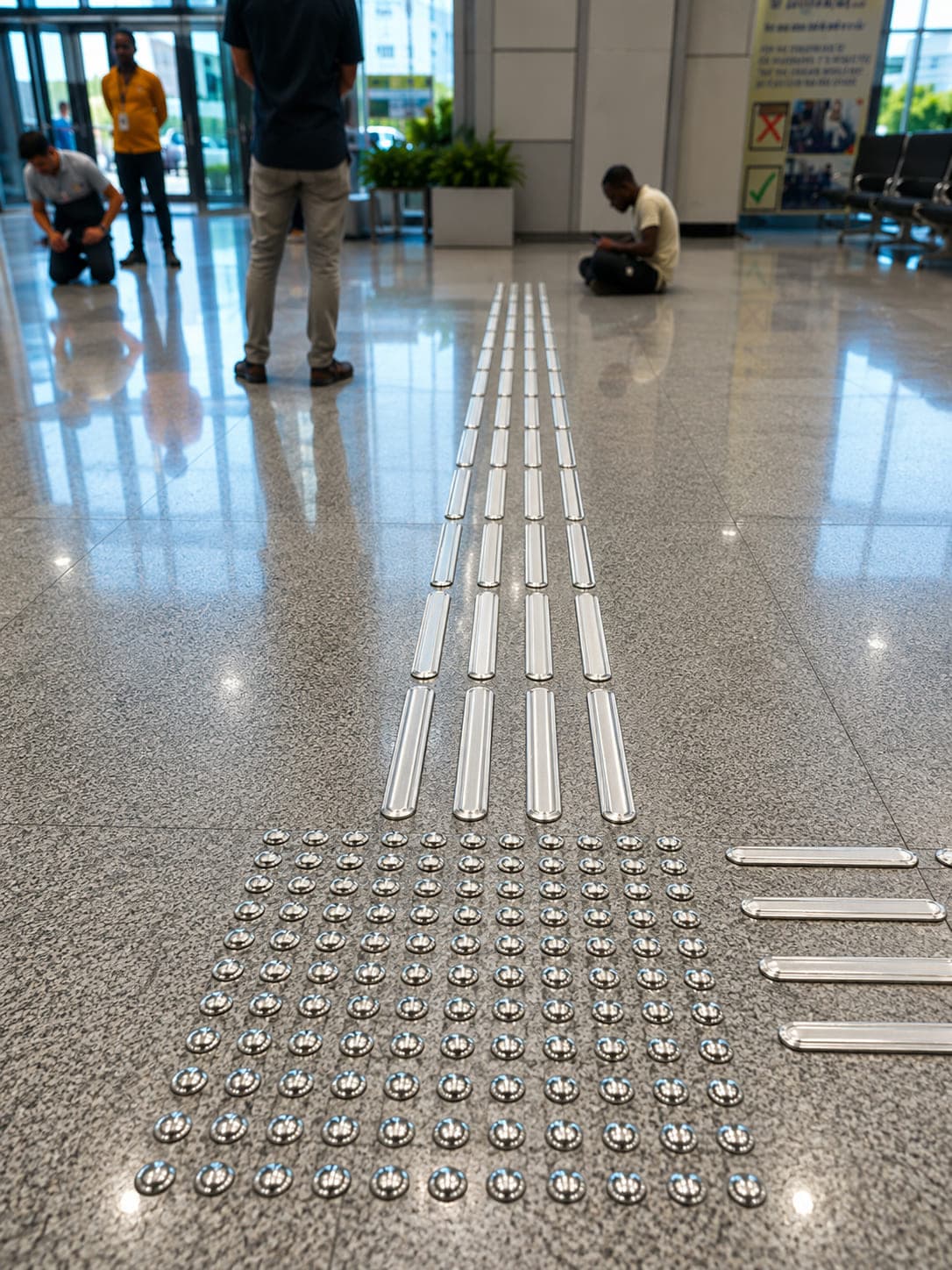
Key Highlights at a Glance
- Warning studs (Ø35mm × 5mm) mean 'STOP / CAUTION' at stairs, lifts, and ramps.
- Directional strips (280mm × 35mm × 5mm) mean 'WALK HERE' and must have rounded bullnose ends so canes do not catch.
- Grade 304 Stainless Steel gives 25+ years of luxury durability; Polyurethane provides high-contrast safety visibility.
- Choose zero-drill 3M VHB tape for leased offices or stem-pin anchors for heavy outdoor public footfall.
The Challenge & Industry Context
Commercial towers, IT campuses, and public buildings across India are legally required under the Rights of Persons with Disabilities (RPwD) Act 2016 and MoHUA 2021 guidelines to provide accessible walkways. However, facility managers often struggle to understand what tactile indicators actually do, which material to select, and how to install them without cracking expensive marble or granite floors.
Axiom Spaceworks provides certified Grade 304 stainless steel and polyurethane (PU) tactile systems with precision diamond coring or no-drill 3M VHB adhesive options, ensuring full statutory compliance and long-term durability.
How Tactile Indicators Work: Studs vs Strips & Materials
Tactile ground surface indicators (TGSI) communicate essential physical signals through the soles of shoes and white canes. They are divided into two simple categories:
Warning Studs (Hazard Alerts: 'STOP & PAY ATTENTION')
Circular raised domes (Ø35mm diameter × 5mm height with concentric anti-slip grooves). When a cane user sweeps over them or a pedestrian steps on them, the raised profile immediately signals: 'Stop here! Danger or change of level ahead.' They are installed 300mm before staircases, escalators, ramp edges, and elevator doors.
Directional Strips (Guiding Pathways: 'WALK SAFELY THIS WAY')
Elongated raised bars (280mm length × 35mm width × 5mm height) featuring smooth rounded bullnose ends (R17.5mm). The rounded ends ensure white canes glide effortlessly over them without snagging. Installed parallel in groups of 4 to guide people safely through open reception lobbies and along corridors.
Grade 304 Stainless Steel (SS 304: Luxury & Durability)
Engineered for executive corporate lobbies, Grade-A IT parks, and airports. SS 304 is 100% rust-proof, scratch-resistant, supports heavy trolley wheels, and maintains a premium architectural finish for 25+ years.
Polyurethane (PU) & PVC (High Visual Contrast)
Engineered in bright Safety Yellow, deep Charcoal Black, or contrasting Grey. Essential for low-vision individuals who rely on visual luminance contrast against light or dark floor tiles. Highly cost-effective and impact-absorbing.
Why Accessibility Matters for Indian Workplaces
Statutory Legal Mandate
The RPwD Act 2016 makes universal accessibility mandatory for every commercial facility. Non-compliance can stall building occupancy certificates and corporate social audits.
Fall Prevention & Physical Safety
Anti-slip concentric ridges on studs give instant physical tactile feedback underfoot, preventing dangerous slips and falls near busy stairways and elevator shafts.
Equal Opportunity Workplace
Modern multinational corporations and Indian enterprises prioritize barrier-free spaces, ensuring differently-abled employees and visitors navigate facilities with complete independence and dignity.
How Axiom Spaceworks Executes This on Site
Site Survey & Wayfinding Layout
Our team maps the pedestrian journey from entrance gates to reception, lift lobbies, accessible restrooms, and emergency staircase exits.
Precision Template Positioning
Using laser levels and CNC drilling templates to ensure statutory spacing (50mm center-to-center for studs, 75mm spacing between directional strips).
Clean Installation & Handover
Diamond core drilling with industrial HEPA dust extractors, or clean surface bonding with genuine 3M™ VHB™ tape without loud drilling noise.
Related Case Studies & Guides
View All 9 Guides →Government Tactile Rules & Regulations (Banks & Offices)
A plain-English guide to the latest Indian government rules and statutory standards for tactile indicators. Learn what the RPwD Act 2016, MoHUA 2021 guidelines, and RBI mandates require for corporate offices, banks, ATMs, IT parks, and commercial buildings.
Zero-Drilling Tactile Retrofit in Leased Offices
Corporate tenants in premium IT parks often cannot drill holes into expensive marble or granite floors due to strict landlord lease terms. Here is how industrial 3M VHB self-adhesive tactile systems solve this problem completely.
Braille Signage & Tactile Wayfinding Standards
How modern transit hubs, airports, and large corporate campuses implement standardized Braille signage and tactile wayfinding to create safe, self-reliant navigation for all visitors.
Speak with an Axiom Solutions Specialist
Share your project drawings, floor plans, or site details for immediate compliance checks and itemized cost estimates.